More About Me
I am Shlomo Elkan, a Jewish educator, writer, storyteller, and community builder based in Jerusalem. My work has always centered on people, ideas, and the conversations that help us understand who we are and what we are called upon to build.
I grew up in Marietta, Georgia, in a Jewish home that was first connected with the Reform movement and later with Conservative Judaism. My own Jewish journey unfolded gradually, through questions, relationships, study, and experiences that revealed the depth and vitality of Jewish life. That journey eventually led me to Chassidic thought, rabbinical study, and a life devoted to helping others explore their own relationship with Judaism.
Building Jewish Community
For more than fifteen years, I worked to build an open, warm, and intellectually vibrant Jewish community at Oberlin College. The work was rooted in hospitality, education, and conversation. It meant welcoming students from many backgrounds, creating opportunities for serious Jewish learning, and building a space where people could explore questions of faith, identity, tradition, and purpose.
Some of the most meaningful moments did not take place at a podium or in a classroom. They happened around a Shabbos table, over a cup of coffee, during a long walk, or in an unexpected conversation with someone trying to make sense of a difficult question.
Those experiences taught me that meaningful Jewish education begins with listening. Before we can share an idea, we must understand the person sitting across from us. Before we can offer an answer, we must learn how to honor the question.
A Life of Learning
Chassidic philosophy, particularly the teachings of the Alter Rebbe and Chabad Chassidus, has deeply shaped the way I understand the soul, prayer, relationships, and the purpose of daily life.
What continues to move me about Chassidus is its ability to be revolutionary while remaining completely rooted in Torah and Kabbalah. It does not ask us to escape ordinary life. It teaches us to uncover the spiritual depth already present within it.
I am especially interested in how ancient Jewish wisdom can speak to the emotional and spiritual realities of contemporary life. I believe Torah is not simply a record of what previous generations believed. It is a living conversation that can help us approach questions of identity, responsibility, resilience, belonging, and meaning.
Jerusalem and a New Chapter
Living in Jerusalem has opened a new chapter in my life and work. This city carries history in a way that is almost tangible. The past is never entirely past here. It remains present in the stones, the languages, the disagreements, the prayers, and the lives of the people who call Jerusalem home.
Being here has deepened my interest in memory, exile, return, and the ways a people preserves its identity across generations. It has also created opportunities to meet remarkable individuals working in Jewish education, cultural preservation, interfaith dialogue, storytelling, and social change.
I write about these encounters in my Reflections. Some begin with a public event or an important conversation. Others emerge from Jewish learning, family history, travel, or the small moments that cause us to see something familiar in a different way.
Eitzah
I founded Eitzah out of a growing conviction that some of the Jewish world’s most valuable wisdom lives within people whose stories have not yet been recorded.
Eitzah is an emerging intergenerational storytelling and wisdom initiative. Through thoughtful, long-form filmed conversations with Jewish elders, educators, leaders, artists, and community builders, the project will preserve lived experience and make it accessible to future generations.
The first series, Eitzah: The Builders, will focus on people who have devoted their lives to building institutions, communities, ideas, and forms of Jewish life. Alongside the filmed conversations, I am developing a digital archive and companion book project that will allow these voices to be encountered in greater depth.
Eitzah is not simply about recording biographies. I want to understand how people made difficult decisions, what sustained them, what they learned through failure, and what wisdom they hope to pass forward.
Memory and Family History
My interest in memory is also personal. I am building a family history archive that gathers photographs, documents, recordings, stories, and genealogical discoveries. Family history can easily become a collection of names and dates, but its deepest value lies in understanding the lives behind them.
When we preserve a family story, we give future generations more than information. We give them context, inheritance, and a stronger sense of where they come from.
This belief connects my family archive, my writing, and Eitzah. Each is an attempt to listen carefully, preserve what matters, and ensure that meaningful stories are not lost.
What Guides My Work
At the heart of my work is a belief that memory should do more than preserve the past. It should help us live more thoughtfully in the present and build more wisely for the future.
I remain drawn to serious questions, unexpected encounters, and conversations that cross generations and communities. I am interested in the space where tradition meets contemporary life, where personal stories illuminate larger histories, and where listening becomes an act of preservation.
I welcome conversations with storytellers, educators, scholars, filmmakers, community leaders, and anyone who believes that wisdom should be preserved, shared, and placed in the service of the future.
Writing, Speaking, Podcasts, and More
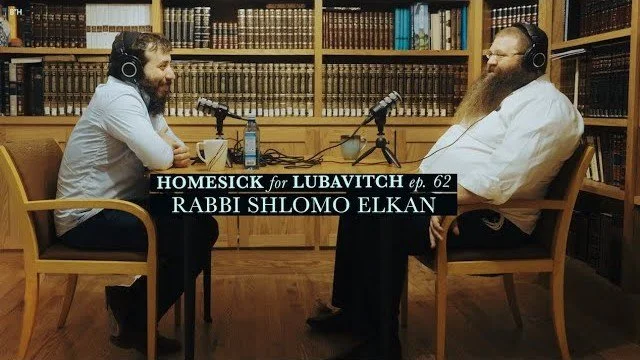
Homesick for Lubavitch
In this episode, we discuss his winding journey to becoming a Lubavitcher and then opening a Chabad House on campus with his wife who comes from a Dati Leumi family in Israel, and how he balances the multitudes of identities they collected from their upbringings as well as the raising of their children.
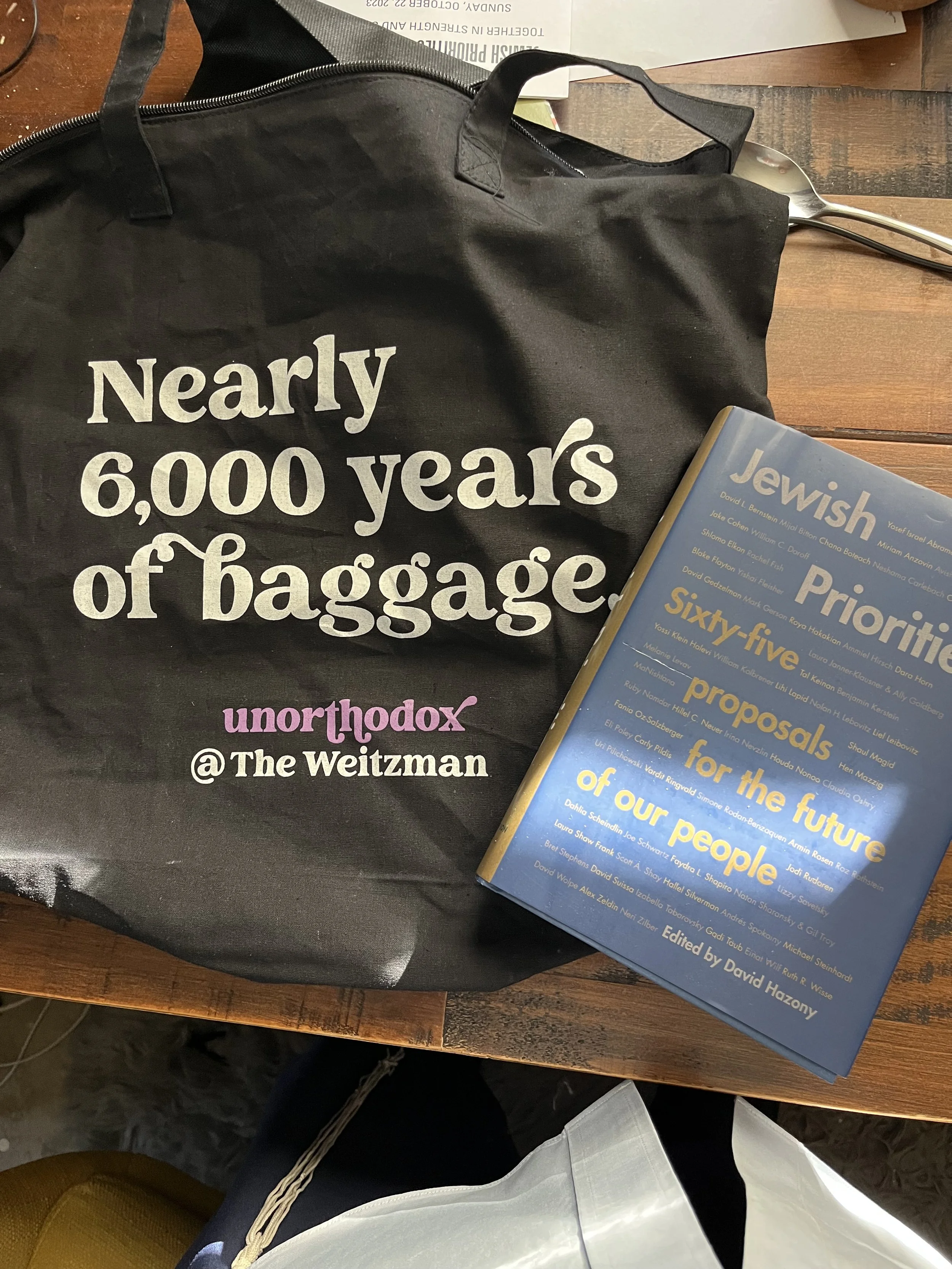
Jewish Priorities Book & Conference
Listen in on the panel from the Jewish Priorities conference that Liel Liebovitz and Stephanie Budnik moderated at the Weitzman National Museum of American Jewish History in Philadelphia. The conference was inspired by Jewish Priorities: Sixty-Five Proposals for the Future of Our People, a collection of 65 essays from notable Jewish thinkers about the most pressing issues facing Jews today. The panel consisted of Shlomo Elkan, David Wolpe and Jodi Rudoren.
The Wall Street Journal
A Rabbi Walks Into a Campus Protest: Alan Ripp
Rabbi Shlomo Elkan hadn’t heard of Oberlin College before heading there in 2010 to establish a Chabad House, which functions as a campus center for Jewish students. “Rural Ohio wasn’t on my radar,” the 34-year-old rabbi, who grew up in Atlanta and received his rabbinical training in New Jersey, tells me.