Finding Space, Part II: At the Closing of the Gates
On Yom Kippur morning, I walked with my boys to one of the nearby Chabad shuls.
The Jerusalem streets were breezy and quiet. The walk was peaceful, but the moment we entered the synagogue, we were met by a wall of heat. We later learned that the air conditioning had gone on the fritz earlier that morning.
The davening carried on beautifully.
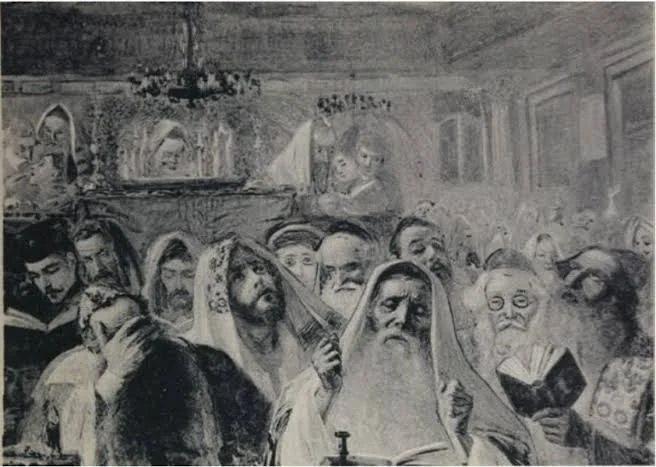
The chazzan brought us through the emotions of Yom Kippur, and as the day wore on, the building became hotter and hotter. I was wearing my kapote, a white kittel, and a wool tallis. It did not take long before I had shvitzed through all of them.
But honestly, the heat was not the focus of the day.
The prayers carried me through.
Because the windows were open, we could hear the singing from the other minyanim around us. Even when we reached a quieter part of our own service, melodies and bursts of energy came drifting through the windows. We were praying in separate rooms and separate buildings, each congregation following its own pace, but the sounds kept reminding us that we were part of something much larger.
One minyan would become quiet just as another erupted in song. A melody would rise somewhere beyond our walls, float through the window, and briefly become part of our prayers too.
When our own minyan picked up, I found myself swept away by its energy.
During the short break before Mincha, I said some Tehillim and spoke with the rabbi and a few of the men from the shul. Then Mincha began, and I could feel the energy building.
As Neilah approached, the synagogue filled again.
Neilah is the closing service of Yom Kippur. The name literally means “locking.” The gates that have been open throughout the day are beginning to close, and we gather whatever strength we have left for one final appeal.
The intensity built through the final Avinu Malkeinu and the congregation’s thunderous declarations of the Shema and God’s oneness. Then came Kaddish, the blast of the shofar, and the famous Chabad melody known as “Napoleon’s March.”
The building began to sway.
We sang at the tops of our lungs. It felt as though the niggun went on forever, although it was probably only several minutes. By then, there was hardly any separation between the heat of the room, the sound of the singing, and the emotions of the day.
My entire year began to pass through my mind.
The changes. The transitions. The challenges. My misdeeds and my growth. My relationships. My relationship with Hashem.
As the niggun wound down, I was completely soaked through with sweat. I picked up my machzor, my Yom Kippur prayer book, and discovered that it too was drenched, but not only from the heat.
The pages were wet with tears.
Hot tears. Tears of regret. Tears of strength. Tears filled with hope.
Tears that felt like a promise for the future.
There was almost no room in the synagogue, and there was certainly no cool air. Yet over the course of the day, something inside me had opened.
I had spent Yom Kippur asking to be written into another year.
Those tears felt like my promise to do something with it.