Time to Get Real
There is something strange about the way the Jewish calendar takes us through this time of year.
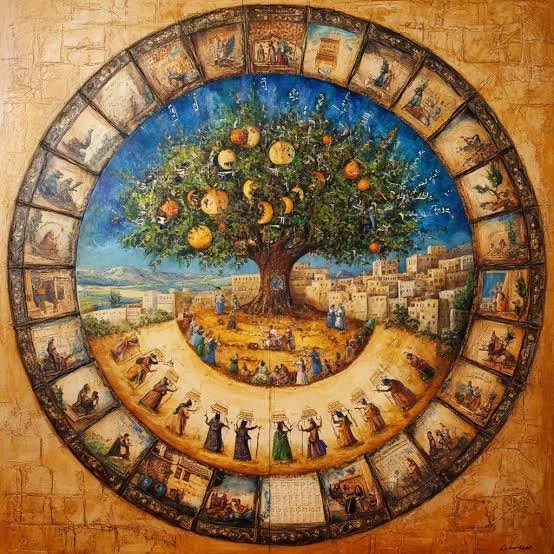
For weeks, we prepare ourselves for Rosh Hashanah and Yom Kippur. We talk about teshuvah. We ask forgiveness. We think about the year that was and the year we hope will be. Then Yom Kippur comes and we strip away almost everything. We don’t eat or drink. We don’t wear leather shoes. We spend hours in shul saying words that are sometimes beautiful and sometimes uncomfortable.
Again and again, we confess.
Ashamnu. Bagadnu. Gazalnu.
We have been guilty. We have betrayed. We have stolen.
There is something incredibly powerful about saying those words together. There may also be something safe about it. It is one thing to stand in a room full of people, beat my chest, and say Ashamnu. It is another thing entirely to sit quietly with myself and say:
Here is where I was wrong.
Here is where I hurt someone.
Here is where I allowed my anger, fear, pride, or insecurity to dictate what I did.
Here is where I have been telling myself a story that makes my behavior easier to live with.
Here is something about myself I would rather not see.
I have spent a lot of years thinking about teshuvah. I have taught it, studied it, spoken about it, and tried to practice it. I have also spent alot of time working with people in difficult circumstances. One of the things I noticed was how challenging it could be for someone to reach the point where they could simply own what they had done.
There were always explanations.
Sometimes very legitimate ones.
A difficult childhood. Addiction. Poverty. A broken relationship. Anger. Someone who had wronged them first. A system that really could be unfair. Understanding those things mattered. They were part of the story. But eventually, for real growth to happen, there had to be another sentence:
And I still did what I did.
Both things could be true.
That is an incredibly difficult place to reach. And I don’t think you need to be in extraordinarily difficult circumstances to understand it. We all tell stories about ourselves. We have to. It is how we make sense of our lives. But sometimes those stories become walls.
They explain why we were right. Why we had no choice. Why the other person was really responsible. Why what we did wasn’t quite as bad as it looks from the outside. Maybe that’s why I have been thinking so much about what Judaism asks us to do immediately after Yom Kippur. After spending a day stripping away our defenses, we are given only a few days before being told to leave our houses.
And build a hut.
Building the Walls
This year, that instruction felt particularly real.
A few months ago, we dismantled a life we had spent years building, packed much of it into boxes, put those boxes on a ship, and started again.
Then Sukkos came.
It was time to build a sukkah.
There was one small problem.
We had nothing to build it with.
A friend very generously offered to lend us a sukkah, which seemed to solve the problem. But when we went to put it together, we discovered that it was missing just enough pieces that there was no way we could actually use it. So we went out and bought everything. Poles. Walls. Schach. Everything. There was something strangely appropriate about it.
Here we were, still trying to construct a new life in Jerusalem, and now I was literally starting from scratch to build the temporary home we would live in for the holiday. As I built it, I was still tripping over boxes from our move that were sitting in the backyard. We had arrived, but we weren’t entirely unpacked. We were home, but we were still figuring out where everything belonged.
And, if I’m being honest, not just the boxes.
For many years, I knew where I fit. I knew my role. I knew my community. I knew much of what I was building. Now some of those questions are open again.
What am I building?
Where do I fit?
What comes next?
Who am I when some of the titles, places, routines, and structures that helped define me aren’t there anymore? And there I was, surrounded by boxes containing pieces of our old life, constructing deliberately flimsy walls for our new one.
Then something happened.
The owner of our building came by and told us that an additional storage unit had become available. It was ours for the taking. I had to laugh. Here I was building a deliberately temporary structure while surrounded by possessions I had nowhere to put, and suddenly we were given a little more permanent space.
I don’t want to overstate the spiritual significance of a storage unit. But sometimes the timing of something is enough to make you stop. We spend so much of our lives trying to get everything into the right place. We want the permanent structure. We want the secure walls. We want to know where our things belong.
We want to know where we belong. And sometimes, while we are still figuring all of that out, we have to build the sukkah anyway.
Vulnerable by Design
There is something wonderfully absurd about a sukkah. We spend our lives making our homes more secure and comfortable. We want solid walls. A good roof. Climate control. Doors that lock. Then Sukkos arrives and tells us to move outside. The walls may shake. The wind comes through. We hear our neighbors. We hear the street. And the roof itself has to remind us that there is still a world above us.
The sukkah is vulnerable by design. And yet Jewish tradition calls the sukkah tzila d’meheimanusa, the shade of faith.
I keep coming back to that.
Why would a place representing security in Hashem be constructed in a way that makes our physical security feel less certain? Maybe because for one week we are being asked to reconsider what makes us feel secure in the first place. And I’m not only talking about buildings.
We construct walls around ourselves, too. Our identities. Our accomplishments. Our reputations. Our grievances. Our explanations. The stories we have carefully constructed about who we are and how we got here. Some of those walls are necessary. Some are healthy. We need boundaries. We need protection. We need a sense of who we are.
But some walls keep other people out.
And some keep us from seeing ourselves too clearly. Maybe there is a reason Sukkos comes right after Yom Kippur.
Yom Kippur asks me to tell the truth.
Sukkos asks whether I am willing to be vulnerable enough to live with it.
Going Back Inside
And then Sukkos ends. We don’t stay in the sukkah forever. We go back inside. I think that matters.
Judaism isn’t asking us to live permanently exposed. Vulnerability itself isn’t the goal. We need homes. We need walls. We need boundaries. We need stability. The question is what happens when we go back inside. Do we put every wall back exactly where it was? Do we return to the same explanations? The same defenses? The same version of ourselves? Or did something happen while we were sitting under the schach? That is the question I am carrying with me as the holidays end. Yom Kippur gave me plenty of opportunities to confess. Sukkos gave me a week to sit with less protection than usual. Now comes something harder.
Being honest.
Honest enough to not use my mistakes as an excuse to beat myself up. And not pretending that every complicated story has a simple villain, especially when that villain is me. Just honest enough to hold two things at once.
I can understand why I did something and still regret doing it.
I can be proud of much of the life I have built and still recognize things I wish I had built differently.
I can be grateful for where I am and still be uncertain about where I am going.
I can believe that I am growing and still have a lot of growing left to do.
Maybe real teshuvah requires us to stop insisting that we be either the hero or the villain of our own story. Maybe we just have to be willing to tell the truth about the person in the middle.
This year, I built a sukkah while tripping over boxes from the life we had just left behind.
Eventually those boxes will find their places.
The sukkah will come down.
The machzorim will go back on the shelf.
The walls will go back up.
I don’t think the challenge is to somehow hold onto the feeling of the High Holidays. Feelings come and go.
The question I’m left with is simpler, and probably harder:
Did I learn anything while the walls were down?
For weeks I asked Hashem for another year.
Now I have to decide what I’m going to do with it.
Time to get real.