Finding reasons to celebrate in the quiet month of Cheshvan
After the excitement of Tishrei, the Jewish calendar goes remarkably quiet.
Think about it. We spend nearly an entire month moving from one significant occasion to the next, from Rosh Hashanah all the way to Simchas Torah. There are shofar blasts, hours of davening, festive meals, sukkahs to build, lulavim to shake, and dancing with the Torah.
And then comes Cheshvan.
Nothing.
Well, not exactly nothing. There are still Shabbos and Rosh Chodesh, of course. But compared to the month that preceded it, Cheshvan seems almost painfully ordinary.
There is a familiar explanation for why the month is often called Marcheshvan. The word mar means bitter, and tradition associates that bitterness with the absence of holidays. After a month filled with celebration and inspiration, we find ourselves facing several uninterrupted weeks of ordinary life.
I’ve always found something amusing about that. Apparently, a month without a holiday is reason enough to call it bitter.
It reminds me of one of my favorite Chassidic stories.
The great Chassid Reb Hillel Paritcher had a particular fondness for saying Shir Hamaalos before bentching. Traditionally, on Shabbos and Yom Tov, we recite this beautiful, joyful chapter of Tehillim, while on ordinary weekdays, we say Al Naharos Bavel, a far more somber reflection on exile and the destruction of Jerusalem.
Reb Hillel, however, was always looking for an excuse to say Shir Hamaalos.
If it was a festive occasion, wonderful! Shir Hamaalos.
If there was an honored guest at the table, even better! Shir Hamaalos.
He would find some reason, however small, to turn an ordinary meal into an occasion worthy of celebration.
But one day, there was no holiday, no special occasion, and no guest to be found.
What was he to do?
As the story goes, Reb Hillel thought for a moment and announced that something extraordinary had happened. For once, there was absolutely no reason to say Shir Hamaalos! Such an unusual occurrence was itself worthy of recognition.
And so, naturally, he said Shir Hamaalos.
I love that story.
There is a wonderful Chassidic cleverness to it, of course. But I think there is also something delightful about a person who is so determined to find reasons for joy that even the absence of a reason becomes an occasion to celebrate.
Which brings me back to Cheshvan.
Because here we are, in the supposedly bitter month, and I have to say, I’m finding quite a few reasons to celebrate.
We’ve been living in Jerusalem for three months now.
You can plan a move. You can arrange shipping, find a place to live, register children for school, and navigate what seems like an endless collection of government forms and bureaucratic hurdles.
But you can’t really plan the moment when a new place begins to feel like home.
That happens on its own schedule.
Lately, I’ve been noticing it in the children.
They’re settling into their respective schools, developing routines, and, most importantly, making friends. They come home with stories about classmates, teachers, and the little adventures that fill a school day. Every so often, one of those new friends even comes home with them.
For a parent, there’s something enormously reassuring about that.
Moving children across the world is a tremendous responsibility. We can believe deeply in the decision we’ve made, but they’re the ones who have to walk into unfamiliar classrooms, navigate new social circles, and find their own sense of belonging.
We can’t do that work for them.
So when they come home excitedly talking about their day, or when another child’s voice joins the noise in our house, I find myself smiling.
They’re building lives here.
And little by little, Jerusalem is becoming their home in ways that go far beyond the address on our mail.
Then there’s Devorah.
She’s been doing quite a bit of teaching lately, and it’s wonderful to see her bringing her talents and experience into new settings. But anyone who knows Devorah knows that two of her greatest passions are coaching and guiding people through the extraordinary landscape of Eretz Yisrael.
She has a remarkable ability to connect with people, to help them think more deeply about themselves, and to find meaning in the places and experiences around them.
I’ve watched her do this for years.
And now, something rather exciting is beginning to take shape.
I’m deliberately being a little mysterious here because this isn’t quite an announcement yet. But I can see the beginnings of something that brings together so much of what she loves and does so well.
And I couldn’t be more excited for her.
There’s a special pleasure in watching someone you love begin to develop something that is so clearly an expression of who they are. I’ve watched her enthusiasm grow as the possibilities begin to take shape, and I suspect some wonderful things are ahead.
I have a very good feeling about this one.
As for me, well, I have a few things cooking too.
Over the past several months, I’ve been spending an enormous amount of time thinking about guidance, advice, and the wisdom we inherit. I’ve been thinking about the stories we carry, the people who shaped us, and the responsibility we have to pass their experiences and insights along.
The Jewish people have an extraordinary relationship with memory.
But how many remarkable lives have been lived quietly, their lessons known only to a handful of people? How many conversations could have changed someone’s understanding of themselves, their family, or their place in Jewish history, but never took place?
Those questions have been occupying a great deal of my attention.
They’re also at the heart of Eitzah, an initiative I’ve been developing to connect the wisdom and lived experiences of one generation with the curiosity and questions of the next.
I’ve already begun a soft launch, and I’m becoming increasingly excited about what this could become.
There are conversations happening, ideas being explored, and opportunities beginning to emerge. What started as something I spent countless hours thinking about is gradually becoming something tangible.
And that’s an extraordinary feeling.
Of course, there’s an enormous amount of work ahead. Some days, the possibilities seem endless. Other days, the number of things that still need to happen can feel a little overwhelming.
But I find myself waking up genuinely excited about the work ahead. There are people I want to meet, conversations I want to have, and ideas that I’m eager to bring to life.
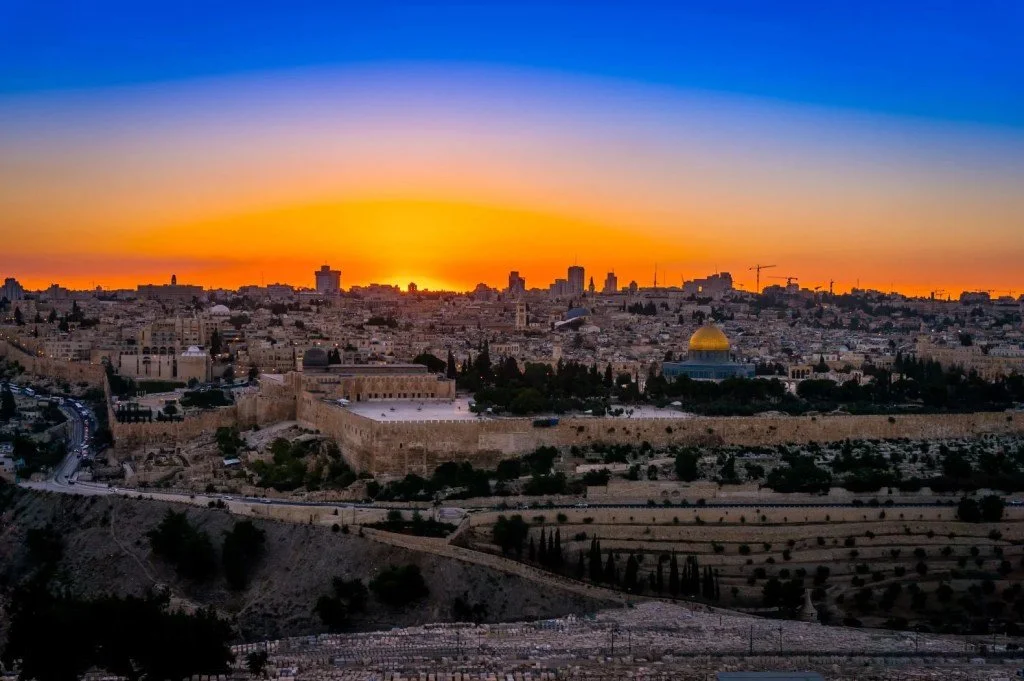
I suppose that’s why the word precipice has been on my mind.
We often use it to describe standing at the edge of something dangerous, staring down at an uncertain drop.
But a precipice also offers a remarkable vantage point.
You can see a landscape stretching out before you, with roads you haven’t traveled and places you haven’t yet reached. Some paths are clear. Others disappear around bends, leaving you to wonder what lies beyond them.
And right now, I find that view incredibly exciting.
I can see possibilities beginning to emerge for our family, for Devorah, for the children, and for the work I hope to accomplish here in Israel.
I don’t know where every path will lead. I’m not even certain which ones we’ll end up taking.
But for the first time since our move, I can feel something shifting.
The children are finding their place. Devorah is beginning to explore something that brings together her greatest passions. And the ideas I’ve been carrying around for so long are finally starting to find their footing.
We’re beginning to build a life here, and I’m excited to see what it becomes.
Which brings me, once again, to Cheshvan.
There are no extraordinary celebrations filling our calendar. Instead, there are children coming home with new friends, ideas slowly turning into plans, and conversations that may lead to wonderful opportunities.
There is the quiet satisfaction of watching a decision we made months ago begin to take on a life of its own.
And there is the excitement of knowing that so much of what lies ahead is still waiting to be discovered.
I keep coming back to Reb Hillel Paritcher.
I imagine he would have had a wonderful time finding reasons to celebrate around our table these days.
So here I am, standing on the precipice, looking out at a future that remains wonderfully uncertain.
I don’t know exactly what’s waiting on the other side, but I can’t wait to find out.
And in this quiet month of Cheshvan, I think I’ve found more than enough reasons to say Shir Hamaalos.